
Norwalk Arrest Records and Charges
Arrest records begin with law enforcement. In Norwalk, the Police Department posts daily arrest, citation, and incident logs, and its Records Unit handles report-copy and public-window work. The research also notes that the Norwalk Police Identification Unit maintains arrest records for persons arrested by Norwalk Police, fingerprint arrest cards dating back to 1940, booking photos on film dating to the 1980s, and current digital arrest photos. That does not mean all photos or reports are public.
Court charge records begin after the arrest side. Connecticut uses State's Attorney offices as the prosecutor system. The Stamford/Norwalk State's Attorney decides or handles many formal criminal charges for the district, and those charges become part of the Superior Court case. Booking and custody details belong with police or DOC channels, while the full case file and final outcome belong with Norwalk criminal court records.
The Norwalk Police daily logs page is the local source for recent daily arrest, citation, and incident log access.
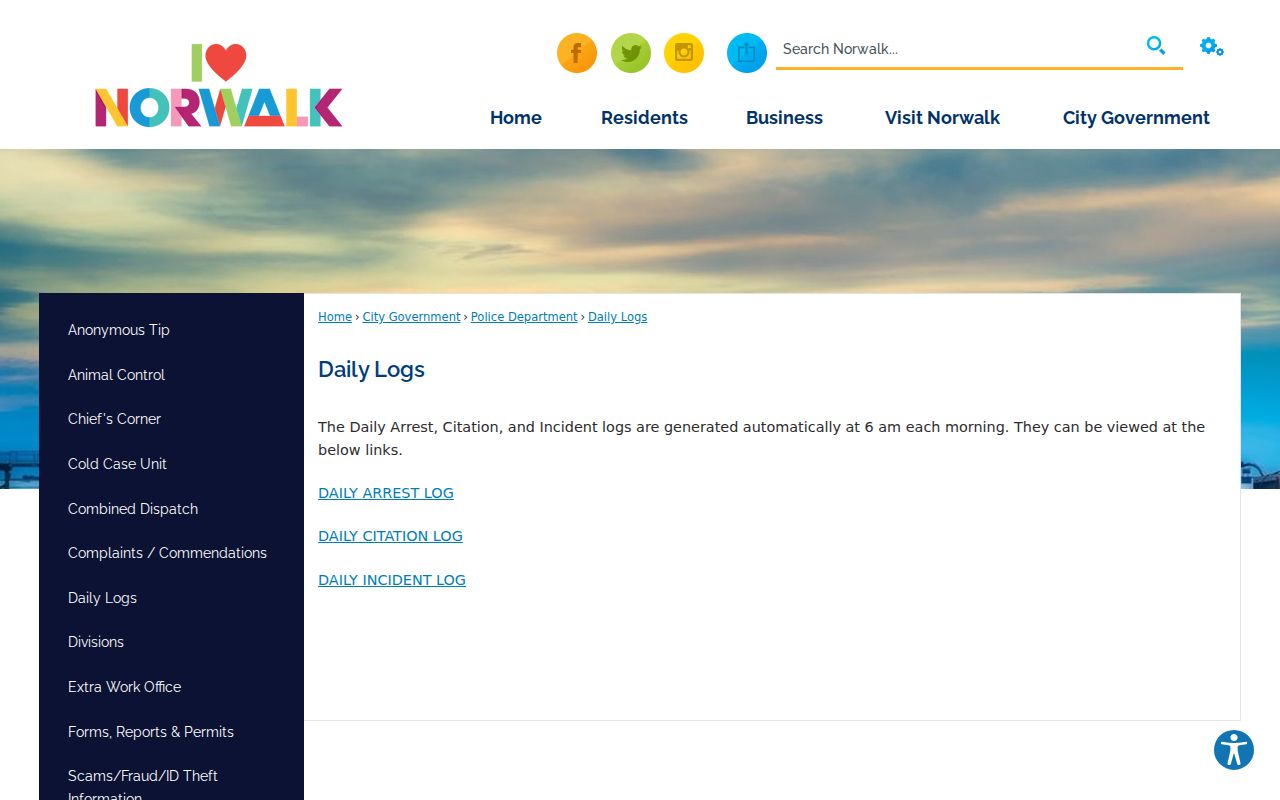
Daily logs can identify recent police activity, but they are not the same as the formal court charge list or a final conviction record.
Find Norwalk Arrest Records and Charges
The search path should start with the record type. For a recent arrest or citation, check Norwalk Police daily logs and then use the Records Unit or city FOIA portal if a posted log does not provide enough detail. For charges after arrest, use the Judicial Branch pending criminal and motor vehicle searches by defendant or docket number. For conviction status, use the conviction search and read the Judicial Branch warning about erasures, corrections, pardons, and modifications.
- Check the Norwalk Police daily logs for recent arrests, citations, or incidents generated on the public page.
- Use Judicial Branch pending criminal or motor vehicle search to see whether a court case or charge appears.
- Select Norwalk GA 20, Norwalk Housing, Stamford GA 1, or Stamford JD if a court-location filter fits the case.
- Read each charge separately because one arrest can lead to several counts with different statuses.
- Use the city FOIA portal, Police Records Unit, Clerk of the Superior Court, or attorney for reports, certified copies, older records, or unclear results.
Connecticut DOC is a custody channel, not a charge-status channel. A person in DOC custody may be accused, awaiting trial, sentenced, or otherwise held, so custody should not be read as proof of conviction. For booking-side jail context, use Norwalk inmate records.
The daily log, court search, and conviction search should be compared by date and name because they answer different questions. A daily arrest entry may show the police event. A pending court case may show charges and court location. A conviction search may show the final guilty outcome, if one exists and remains public.
Charging Documents After Arrest
The charging document is the bridge between the arrest and the court charge record. It states the formal accusation that the court tracks. Connecticut research did not provide a Norwalk-specific grand jury or charging-form inventory, so this table uses the standard charging-document concepts while tying access to the State's Attorney and Superior Court record.
| Document | Who Uses It | What It Does | Norwalk Access Point |
|---|---|---|---|
| Complaint | Police or prosecutor channel | Starts or supports the formal accusation after arrest or citation. | Police Records Unit, FOIA, or court case file depending on the document. |
| Information | State's Attorney | Lists charges the prosecutor files or proceeds on in Superior Court. | Judicial Branch docket tools and Clerk of the Superior Court. |
| Indictment | Formal prosecution channel | Charges serious offenses through a formal accusation process where applicable. | Superior Court file and prosecutor or attorney channel. |
Norwalk Charge Status Table
Charge status changes as the criminal case moves. A charge may start as pending, be amended or reduced, be dropped, receive a nolle prosequi, be dismissed, or end in a conviction. The current court record should be checked instead of relying on an old arrest log or third-party background report.
| Status | What It Means | Why It Matters |
|---|---|---|
| Pending | The charge is active and has not reached a final outcome. | Pending charges are not convictions. |
| Amended | The prosecutor or court record changed the charge from an earlier version. | The first arrest label may not match the final court charge. |
| Reduced | The charge is lowered to a less serious offense or category. | The disposition and sentence should be read by final charge. |
| Dropped or dismissed | The charge does not proceed or is dismissed by the court. | Erasure may apply if the statutory conditions are met. |
| Nolle prosequi | The prosecutor declines to proceed on the charge at that point. | Public visibility can depend on later statutory and court-record rules. |
| Convicted | A guilty plea, verdict, or qualifying court outcome has been entered. | Sentencing and criminal history consequences may follow. |
Charge vs Conviction Comparison
Norwalk arrest records and charge records often appear before the case outcome is known. That timing creates a common mistake: treating an arrest or charge as if it were a conviction. The official court record should be checked for disposition before any conclusion is drawn.
| Point | Charge | Conviction |
|---|---|---|
| What it is | A formal accusation filed or carried after arrest. | A guilty outcome entered by plea, verdict, or court action. |
| When it appears | Early in the case and can change. | After final disposition on that charge. |
| What to check | Charge code, court location, pending status, and amendments. | Disposition, sentence, erasure status, and current official search result. |
| Public caution | May later be dismissed, dropped, reduced, or erased. | May still be affected by pardons, corrections, erasure, or modification. |
Charge Codes and Severity
Charge records use statutory labels, docket types, and case categories to describe the accusation. The research captured criminal and motor vehicle docket type options such as CR and MV, plus court-location codes and category filters. A single Norwalk arrest can produce multiple charges, and each charge can have its own status, disposition, and sentence.
Severity should be read from the official charge text and court context, not from a short police log line. Some motor vehicle matters are court cases, while others are DMV or city parking issues. Norwalk parking tickets are handled through city parking tools, separate from state Superior Court criminal or motor vehicle charge records.
Public Access to Arrest Records
Conn. Gen. Stat. Sec. 1-215 is the central arrest-record access rule in the research. It makes arrest records public from the time of arrest, but it also identifies material that may be protected, including witness identities, victim identifying information for specified offenses, sealed court material, juvenile records, erased records, and details that could prejudice a pending prosecution.
The Connecticut arrest-record statute is assigned to this page because it defines what public arrest information can be available and what may be withheld.
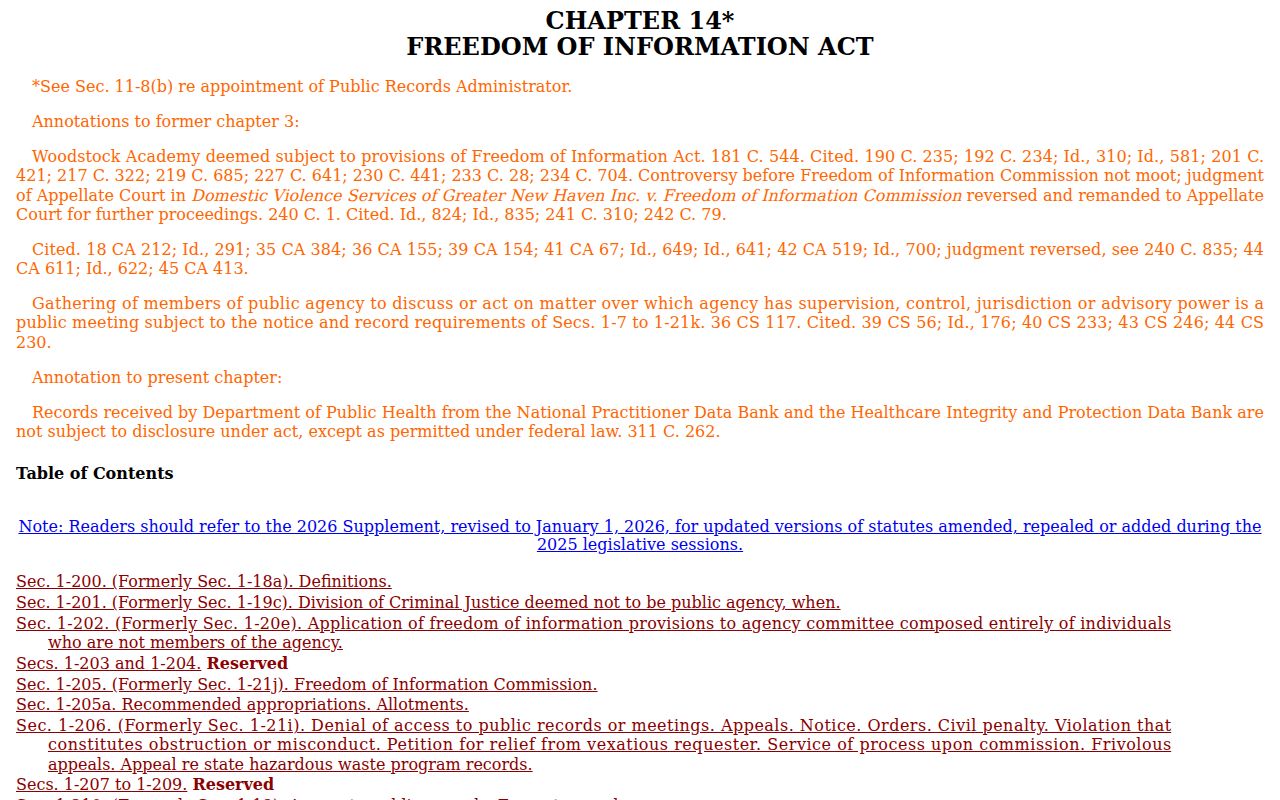
The statute explains why a police record can be partly public while still withholding protected victims, witnesses, juvenile material, sealed items, or pending-prosecution details.
Statewide Charge and History Lookups
Statewide criminal history should not be confused with Norwalk's local arrest log or a single Superior Court docket. The Judicial Branch conviction search is an official court tool for criminal and motor vehicle convictions by defendant, and it warns that criminal history can change because of erasures, corrections, pardons, and modifications. DOC custody search is a separate statewide custody tool. DMV driver history is a separate motor vehicle record.
For a complete arrest-to-charge view, check police logs or reports for the arrest side, court docket tools for the charges, conviction search for final guilty outcomes, DOC for custody status, and DMV for driver-history records. Each channel answers a different question.
Sealed vs Erased Charge Records
Connecticut uses erasure for qualifying criminal records under Sec. 54-142a. Sealed records are closed from public view by law or court order, while erased records generally cannot be disclosed as ordinary police, court, or prosecutor records. Juvenile matter records are also confidential under separate law.
| Point | Sealed | Erased |
|---|---|---|
| Public view | Closed in whole or part, often by court order or statute. | Generally not disclosed as an ordinary public criminal record. |
| Common trigger | Protected affidavits, reports, victims, witnesses, or case-specific orders. | Qualifying not-guilty, dismissed, dropped, mistaken-identity, and related outcomes. |
| Effect on charges | The charge may exist but not be visible to the public. | The public search should not display the erased charge as an ordinary record. |
| Next step | Ask the clerk or attorney about access rules. | Check the official system and contact the clerk or attorney if an erased record appears. |
Restricted Norwalk Charge Records
Restricted charge records include juvenile matters, sealed affidavits or reports, erased criminal records, protected victim or witness information, family violence and sexual assault identifying details, and information that could prejudice a pending prosecution. Police may also withhold or redact investigative material. The correct response to a missing public record is to use official channels, not to assume that no arrest, charge, or case exists.
The Connecticut juvenile matter confidentiality statute is assigned to this charge-record page because juvenile arrests and charges are not handled like ordinary adult public records.
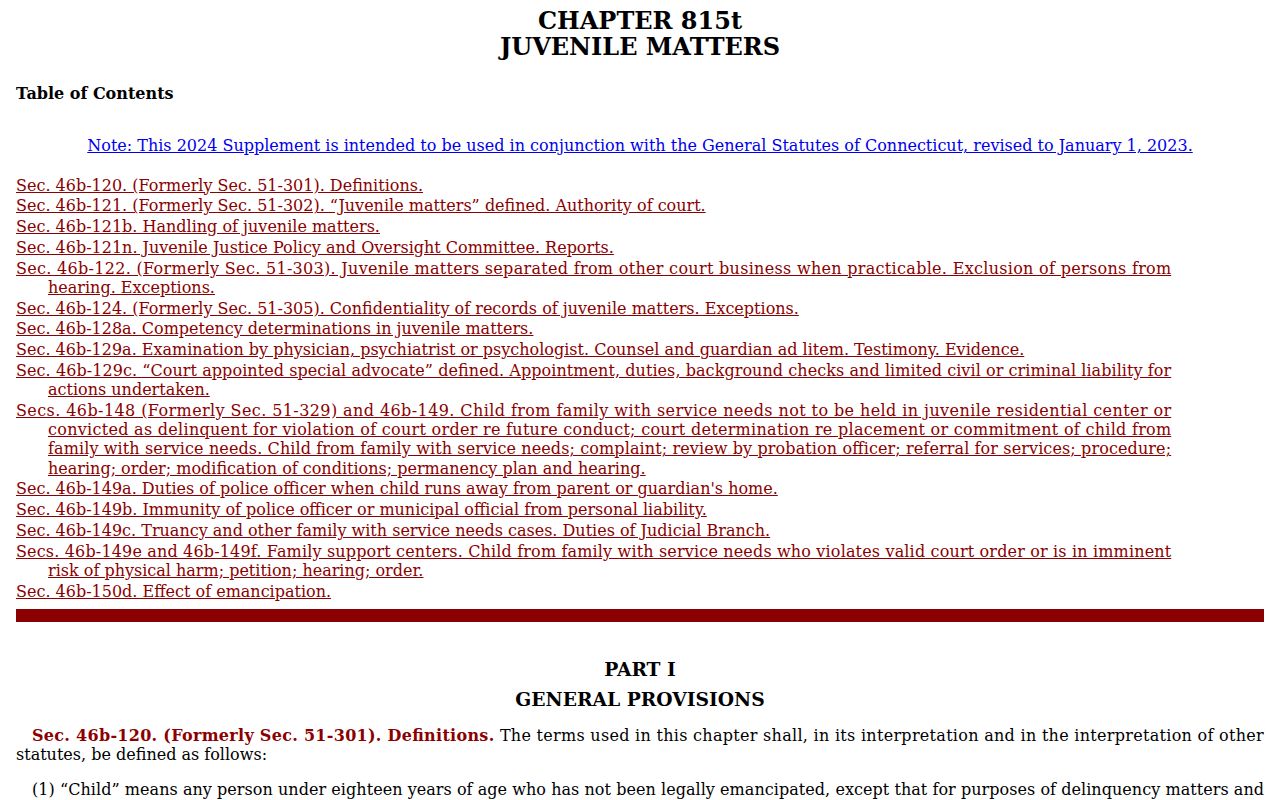
Juvenile confidentiality is one of the main reasons a charge or arrest event may be absent from ordinary public searches.
Important: Arrest logs, charges, convictions, and custody records answer different questions and should not be merged into one conclusion.